In one of the largest datasets on the subject — ASPCA records covering roughly 300,000 dogs and cats across 14 US regions — black cats were adopted at a higher rate than any other coat colour: 31 percent of cat adoptions, compared with 20 percent for grey cats and 18 percent for brown. If the belief is that nobody wants a black cat, the belief is wrong. But the fuller picture is stranger than either the myth or its debunking.
Why there are so many of them
Start with genetics, because it explains more than superstition ever could. Black coat colour in cats is dominant, which means it takes fewer copies of the relevant gene to produce a black cat than to produce most other colours. Black cats are not mysterious or unlucky in greater supply — they are simply what you get more often when cats breed without human interference. A shelter with a lot of black cats in it is, in large part, just reporting arithmetic.
What the waiting-time studies found
Being adopted and being adopted quickly are two different questions, and here the research gets more interesting. A study of adoption records for over 29,000 cats found that black cats took about 2.25 days longer, on average, to be adopted than non-black cats. At another shelter, the gap was larger and split by age: black kittens waited around four days longer than other kittens, and black adult cats waited almost six days longer than other adult cats.

That is a real, measurable delay. It is not a story about cats being unwanted — the adoption-rate figures above argue against that — but it is a story about cats being chosen last, more often, for reasons the data doesn’t fully explain.
The research doesn’t agree with itself, and that’s worth saying
Beyond these two findings, the wider body of research is genuinely split. Some studies report lower adoption rates and higher euthanasia rates for black cats specifically. Others conclude that once you account for how many black cats there are to begin with, the apparent bias mostly disappears — it’s a numbers problem, not a preference problem. Both conclusions have been published. Neither has settled the question.
There is also the superstition itself, which predates any of this data by centuries: the belief that a black cat is bad luck, or a witch’s familiar, or an omen depending on which country you’re standing in. It’s worth naming as a belief people hold, because it shapes which cat a person reaches for in a room full of cages. It is not, on the evidence here, a proven cause of anything measured in these studies. The honest position is the unresolved one: black cats wait a little longer, on average, and there are simply more of them. Both things are true at once, and neither cancels the other out.
A design that carries the story
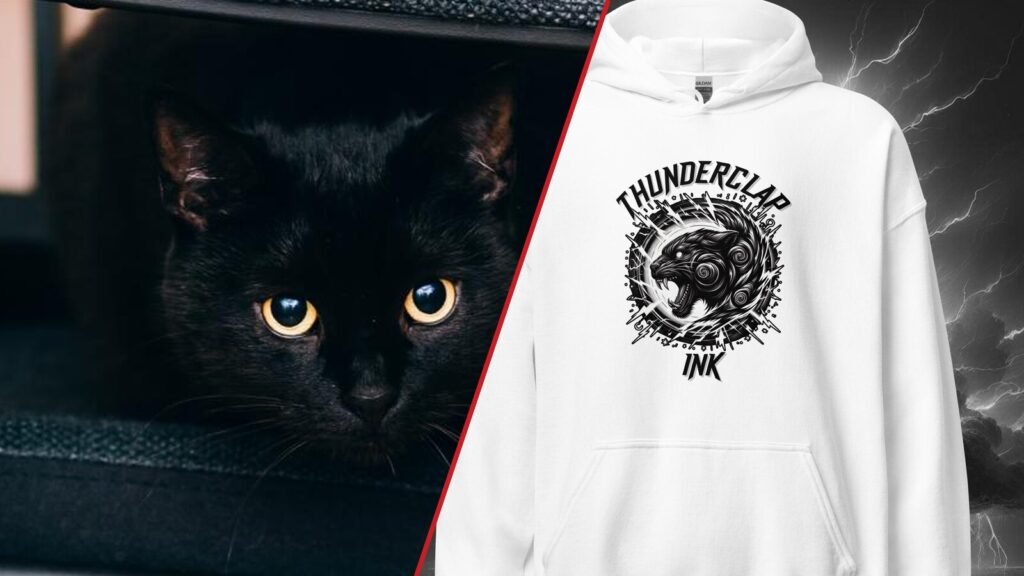
The Black Cat Electric Swirl Unisex Hoodie exists because this animal’s story deserved better than the shorthand version — bad luck, unwanted, a Halloween prop. The actual research is messier and more interesting: a coat colour that’s common because genetics made it common, an adoption rate that beats the myth, and a waiting time that the myth doesn’t fully explain either. Thunderclap Ink puts that on fabric instead of leaving it as folklore.

15% of the profit from every purchase goes to animal conservation foundations around the planet.
Wildlife and nature art on apparel and phone cases. Wear it, and fund the work.
Wear the Roar
Our “Black Cat Electric Swirl” Unisex Hoodie is for animals like these. And for the people who go and get them out.


15% of the profit from every purchase goes to animal conservation foundations around the planet.
Wildlife and nature art on apparel and phone cases. Wear it, and fund the work.
Join the storm
New drops, rescue stories and 10% off your first order.